Noticing an unknown transaction on your credit card can be extremely stressful. An unauthorized credit card transaction means money has been charged to your card without your permission or knowledge.
The good news is that Indian customers are strongly protected under RBI consumer protection rules. If you act quickly and follow the correct process, you may not have to pay even ₹1.
This detailed guide explains what to do after an unauthorized credit card transaction, how refunds work, how banks investigate fraud, and how the RBI zero liability principle protects you in 2026.
What Is an Unauthorized Credit Card Transaction?
An unauthorized credit card transaction is any payment that you did not approve. This includes:
- Online purchases you never made
- Wallet or app payments done without consent
- International transactions you did not authorize
- Transactions showing OTP usage that you never approved
Important: OTP authentication alone does not automatically prove that you authorized the transaction.
Why Credit Card Fraud Is Increasing in India
Credit card fraud cases are rising due to:
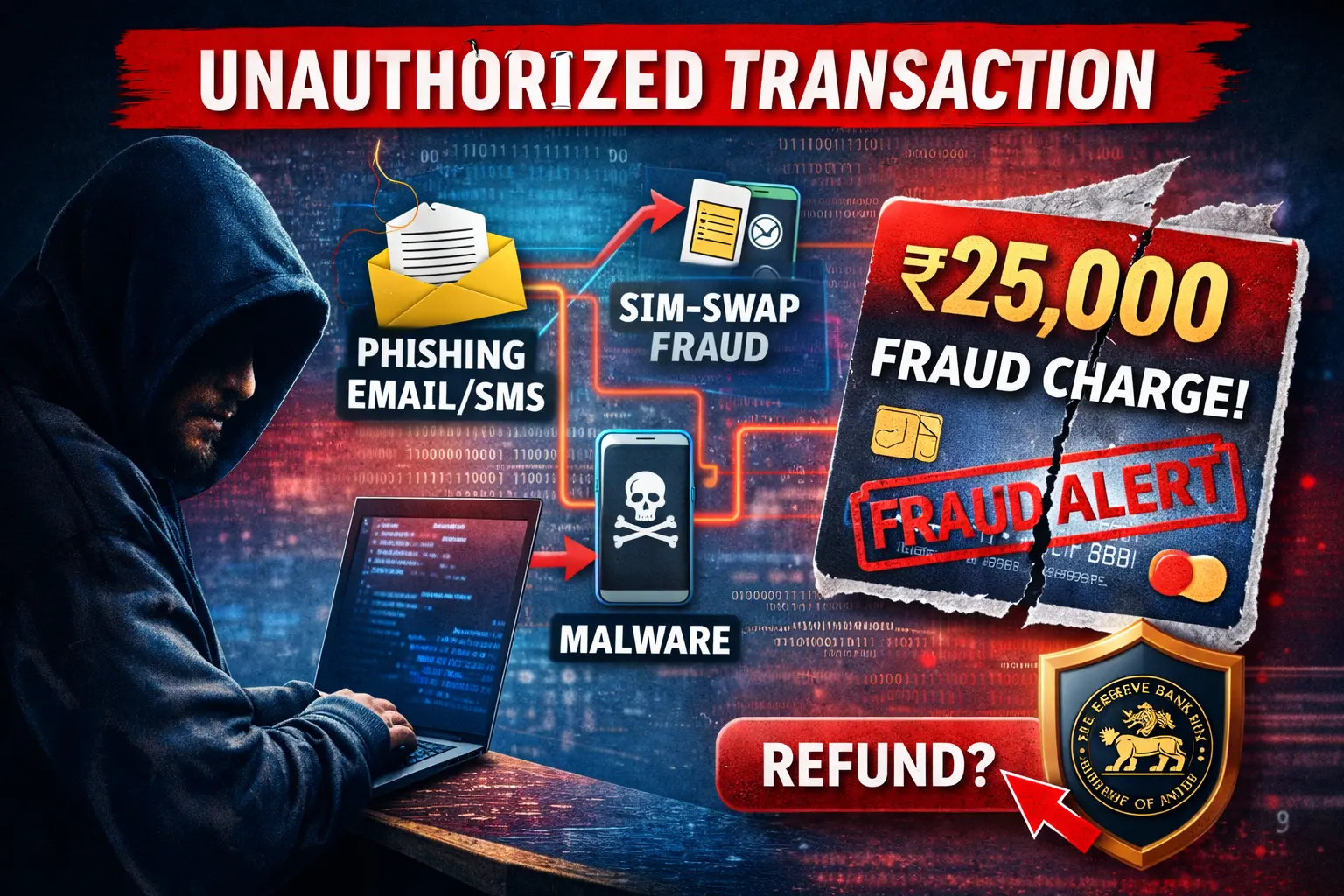
- Phishing emails, SMS, and fake websites
- Malware-infected smartphones
- SIM-swap fraud
- Data breaches at merchant platforms
- Card details saved on insecure apps
Most victims never intentionally share OTP or card details. Fraud often happens silently without the customer realizing it.
What To Do Immediately After an Unauthorized Credit Card Transaction
Step 1: Block Your Credit Card Immediately
As soon as you notice a suspicious transaction:
- Call your bank’s credit card customer care
- Or block the card using your mobile banking app
This prevents further unauthorized transactions. Always note down the complaint or reference number.
Step 2: Report the Fraud to the Bank (Same Day)
After blocking your card:
- Clearly state that the transaction was unauthorized
- Ask the bank to register it as a fraud case, not a merchant dispute
- Request written confirmation via SMS or email
This step activates RBI consumer protection timelines.
Step 3: Raise a Chargeback / Dispute
Most banks require a formal dispute request within 24–48 hours. You may need to:
- Fill an online dispute form
- Send an email to the bank’s credit card team
- Confirm transaction details in writing
Mention the transaction date, amount, merchant name, and clearly state that you did not authorize the transaction.
RBI Zero Liability Principle Explained Simply
According to consumer protection guidelines issued by the Reserve Bank of India (RBI), customers are not liable for losses caused by unauthorized electronic transactions if there is no customer negligence.
When the Customer Has Zero Liability
| Situation | Customer Liability |
|---|---|
| Bank or system failure | ₹0 |
| Third-party data breach | ₹0 |
| Unauthorized use of card details | ₹0 |
| Fraud reported promptly | ₹0 |
The burden of proof lies with the bank, not the customer.
“OTP Was Used” – Does That Make You Responsible?
Banks often reject fraud claims by stating that OTP was used. OTP usage alone does not prove customer negligence.
OTP interception can occur due to:
- SIM-swap fraud
- Spyware or malware
- Compromised devices or networks
Unless the bank can prove negligence, liability remains with the bank.
How Long Does a Credit Card Fraud Refund Take?
| Stage | Expected Time |
|---|---|
| Provisional credit | 7–10 working days |
| Investigation period | 45–90 days |
| Final refund | After investigation completion |
What If the Bank Rejects Your Fraud Claim?
Step 1: Write to the Bank’s Grievance Officer
- Quote your complaint reference number
- Mention RBI zero liability principle
- Ask for written justification
Step 2: Escalate to RBI Banking Ombudsman
If the bank does not resolve your complaint within 30 days, you can escalate the matter to the RBI Banking Ombudsman.
For serious fraud cases, you may also report it on the National Cyber Crime Reporting Portal.
Does Credit Card Fraud Affect Your Credit Score?
No. Unauthorized transactions do not affect your credit score if reported correctly. Only unpaid legitimate dues impact your credit profile.
Learn more about credit scores in our guide: What is CIBIL Score and How It Works.
How to Protect Yourself From Future Credit Card Fraud
- Enable instant transaction alerts
- Avoid saving card details on unknown websites
- Use virtual cards where available
- Avoid public Wi-Fi for payments
- Review statements regularly
For EMI-linked payments, always plan affordability using our EMI Calculator.
Final Checklist After Unauthorized Transaction
- ✔ Block your credit card immediately
- ✔ Report fraud on the same day
- ✔ Raise a written dispute / chargeback
- ✔ Quote RBI zero liability principle
- ✔ Escalate if required
Conclusion: Act Fast, Stay Protected
Unauthorized credit card transactions are stressful, but Indian banking regulations offer strong consumer protection. Acting quickly and following the correct steps greatly improves your chances of a full refund.
If you need help with disputes or financial planning, Get assistance from TechFinserv.
Official RBI Reference:
The Reserve Bank of India has issued an official circular on
Customer Protection – Limiting Liability of Customers in Unauthorised Electronic Banking Transactions.
This document explains zero liability, limited liability, reporting timelines, and bank obligations.
👉 View Official RBI Circular (PDF)
Source: Reserve Bank of India (RBI), Department of Banking Regulation
Disclaimer: This article is for general informational and educational purposes only and does not constitute legal or financial advice. While it references consumer protection principles issued by regulatory authorities such as the Reserve Bank of India (RBI), actual outcomes may vary depending on bank policies and individual case circumstances. Readers are advised to verify details with their bank or official RBI channels before taking action. TechFinserv is not responsible for decisions made based on this content.