
RBI Rules 2026 for Saving Account – UPI, PAN, Fraud & Loan Recovery Guide
The Indian banking system is rapidly evolving with digital transformation, stricter compliance, and enhanced customer protection. In 2026, the Reserve Bank of India (RBI) has introduced and reinforced several important rules that directly impact savings account holders across India.
These updates are designed to improve security, transparency, fraud protection, and financial discipline. Whether you are using UPI, depositing cash, or managing loans, these rules affect your everyday banking experience.
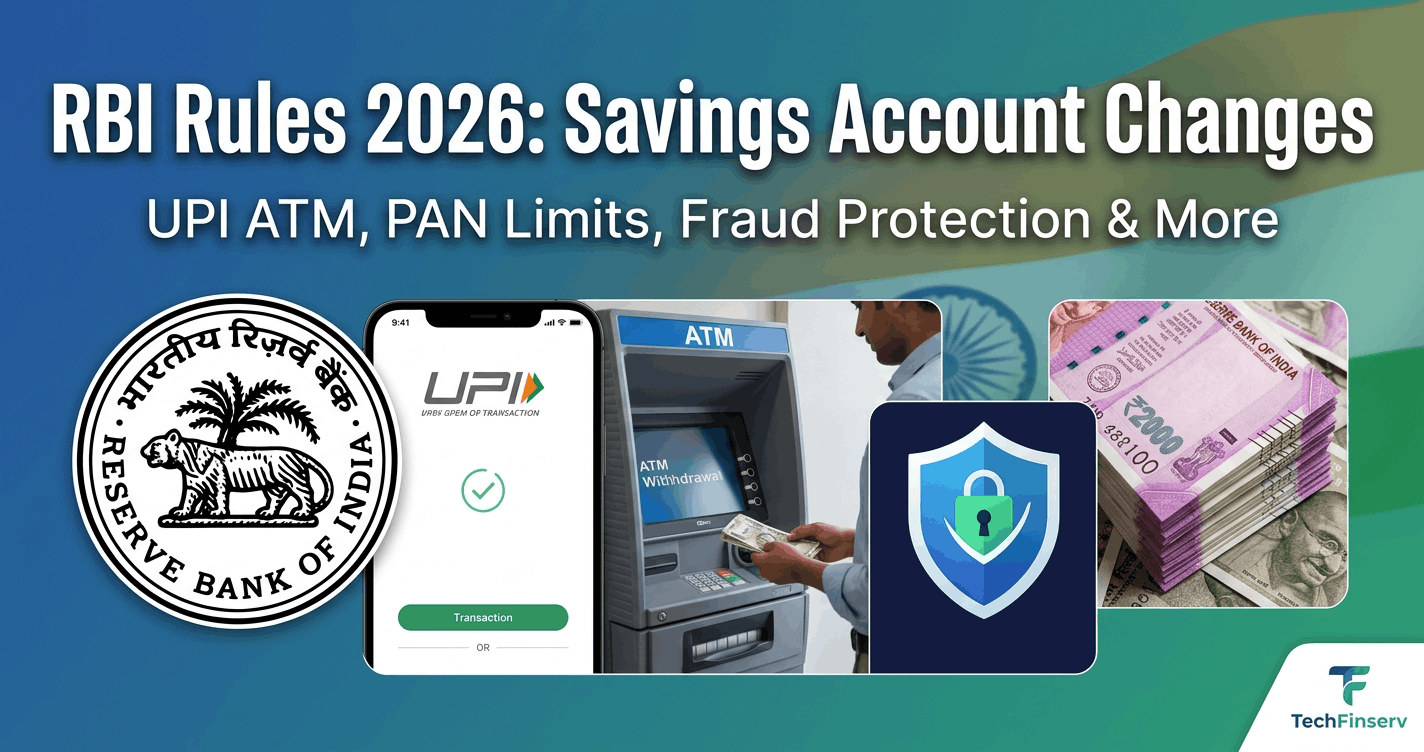
Why RBI Rules 2026 Are Important for Savings Account Holders
A savings account is the foundation of personal finance in India. From receiving salaries to making payments, everything revolves around your bank account.
The RBI regulates banks to ensure:
- Customer protection from fraud
- Transparent financial transactions
- Fair banking practices
- Stability of the financial system
With the rise of digital banking, these RBI rules in 2026 aim to make banking safer, smarter, and more accountable.
1. UPI ATM Withdrawals – RBI Cardless Cash Rules 2026
One of the biggest updates in RBI rules 2026 is the introduction of UPI ATM withdrawals. This allows users to withdraw cash without using a debit card.
How UPI ATM Withdrawal Works
- Select “UPI Withdrawal” option on ATM
- Enter withdrawal amount
- Scan QR code using UPI app
- Enter UPI PIN
- Cash is dispensed
Key Benefits
- No need to carry debit card
- Reduced card fraud and cloning risk
- Quick and secure transactions
- Works with apps like Google Pay, PhonePe, Paytm
Limits
Most banks allow withdrawals up to ₹1 lakh per day depending on limits.
👉 Read more: UPI New Rules 2026
2. PAN Rules and Cash Transaction Limits
The RBI has tightened rules on high-value transactions to control black money and improve transparency.
Key PAN Rules
- PAN is mandatory for large banking transactions
- Cash deposits above ₹10 lakh annually may be monitored
- Frequent high-value transactions can trigger alerts
Real-Life Example
If a person deposits ₹2 lakh every month in cash, even if each deposit is small, the total yearly amount crosses ₹10 lakh — this can trigger scrutiny.
Why This Matters
- Prevents tax evasion
- Tracks suspicious financial activity
- Promotes digital payments
3. Income Tax Monitoring & Social Media Tracking
In 2026, financial monitoring has become more advanced. Authorities can now compare financial data with digital lifestyle indicators.
What Is Being Monitored?
- Luxury purchases
- Social media lifestyle
- Online earnings
Example
If someone shows expensive cars, travel, or luxury items on social media but reports low income, it can trigger investigation.
This ensures better income transparency and tax compliance.
4. BSBD (Basic Savings Bank Deposit Account)
The RBI promotes financial inclusion through BSBD accounts, also known as zero balance accounts.
Features
- No minimum balance required
- Free ATM card
- Basic banking services
- Limited transactions
Who Should Use It?
- Students
- Low-income individuals
- Rural population
These accounts ensure that every citizen has access to banking services.
5. Digital Fraud Compensation Rules
Cyber fraud is increasing, and RBI has strengthened protection rules for customers.
Compensation Structure
- 0–3 days: Zero liability
- 4–7 days: Limited liability
- After 7 days: Customer may bear loss
Example
If ₹20,000 is fraudulently debited and you report it within 3 days, you will get a full refund.
Bank Responsibilities
- Resolve complaints quickly
- Refund unauthorized transactions
- Provide support channels
👉 Learn more: CIBIL Score Guide
6. New Loan Recovery Rules
RBI has introduced strict rules to prevent harassment by recovery agents.
Key Rules
- No abusive language
- No threats or pressure
- Calls allowed only during fixed hours
Your Rights
- Right to dignity
- Right to file complaint
- Legal protection
If violated, customers can complain to the bank or RBI.
Understanding EMI is important for loan planning. Read our guide on what is EMI and how it works.
7. Impact of RBI Rules 2026 on Customers
| Area | Impact |
|---|---|
| UPI & ATM | More secure and convenient |
| Cash Transactions | Higher monitoring |
| Fraud Protection | Faster refunds |
| Loan Recovery | Better customer rights |
8. Common Mistakes to Avoid
- Not linking PAN with bank account
- Sharing OTP or PIN
- Ignoring fraud alerts
- Frequent high cash transactions
9. Tips to Stay Safe and Compliant
- Always link PAN with your account
- Prefer digital transactions
- Check bank statements regularly
- Enable SMS alerts
- Report fraud immediately
10. Future of Banking in India
India is moving towards a digital-first economy. RBI rules are shaping the future of banking by:
- Reducing cash dependency
- Promoting digital payments
- Strengthening fraud detection systems
- Protecting consumer rights
These rules are just the beginning of a more advanced financial ecosystem.
11. Final Thoughts
The RBI Rules 2026 for savings accounts are designed to create a safer, transparent, and efficient banking system.
Understanding these rules helps you:
- Avoid penalties
- Stay protected from fraud
- Make smarter financial decisions
👉 Use tools like EMI Calculator to plan your finances better.
12. Penalties for Not Following RBI Rules
Not following RBI rules can lead to serious consequences such as account restrictions, penalties, or even income tax notices. Frequent high-value cash transactions without proper documentation can trigger scrutiny.
- Account freezing in suspicious cases
- Income tax notices for unexplained deposits
- Transaction monitoring alerts
13. RBI Digital Banking Safety Guidelines
- Use only official banking apps
- Avoid public Wi-Fi while making transactions
- Enable two-factor authentication
- Regularly update your passwords
14. Old vs New RBI Rules Comparison
| Feature | Old System | RBI Rules 2026 |
|---|---|---|
| ATM Withdrawal | Debit Card Only | UPI + Cardless |
| Fraud Protection | Limited | Strong Compensation Rules |
| Cash Monitoring | Basic Tracking | Advanced AI Monitoring |
Disclaimer: This article is for informational purposes only. Rules may vary depending on banks and regulatory updates.
Frequently Asked Questions (FAQs) ❓
Yes, it is secure as it uses UPI PIN authentication.
Transactions above ₹10 lakh annually may be monitored.
Report immediately to get zero liability.
No, RBI strictly prohibits harassment.
 UPI New Rules 2026: What Changes for Daily Users & Merchants?
UPI rules are changing. Learn about new limits, compliance updates, merchant impact, failed transaction rules and safety tips for 2026.
Read More → What is EMI ?
What is EMI in Loans Discover its Full Form, Meaning and smart tips to reduce Your Personal Loan And Home Loan EMIs Easily.
Read More → Flexi Hybrid Loan - Explained
How Flexi ODs mix flexibility with lower cost.
Read More → Tips to Improve Credit (CIBIL) Score
Boost your credit (CIBIL) score efficiently with our simple and effective tips for better loan offers.
Read More →