Before approving any loan, banks do not rely only on your salary or business income. They follow a structured eligibility process using two key concepts: FOIR (Fixed Obligation to Income Ratio) and Income Multiplier.
Understanding these concepts can help you increase your loan eligibility, avoid rejection, and choose the right loan amount. This guide explains everything in simple language for common people and small business owners in India.
What Is Loan Eligibility?
Loan eligibility is the maximum loan amount a bank is willing to offer you based on your financial capacity and risk profile.
Banks want to ensure that:
- You can comfortably repay EMIs
- Your income is stable
- You already do not have excessive loan burden
To calculate this, banks mainly use:
- FOIR (Fixed Obligation to Income Ratio)
- Income Multiplier method
- Credit score (CIBIL)
What Is FOIR? (Fixed Obligation to Income Ratio)
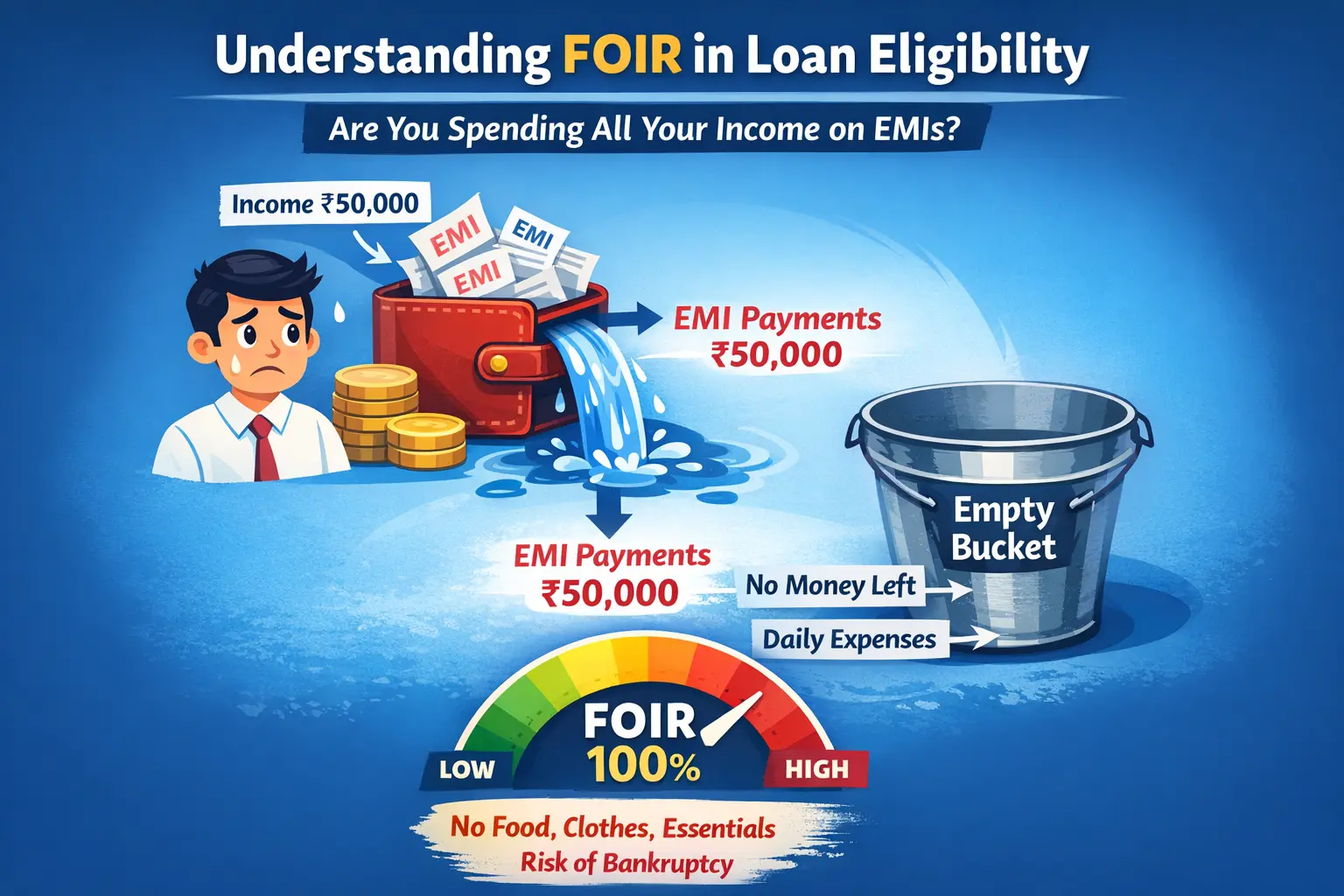
FOIR was introduced as a responsible lending principle to protect consumers from over-leveraging. It ensures that a borrower does not commit their entire income towards EMIs, leaving no money for daily living expenses such as food, rent, clothing, utilities, and emergencies.
For example, if a person earns ₹50,000 per month and is already paying ₹50,000 as EMI, it clearly means there is no income left for day-to-day expenses. Such a situation can quickly lead to financial stress, missed payments, and eventual default.
By applying FOIR limits, banks aim to prevent borrowers from falling into unsustainable debt or financial distress, thereby promoting responsible borrowing and long-term financial stability.
FOIR shows how much of your monthly income is already committed to fixed payments like EMIs.
In simple terms:
FOIR tells the bank how much financial pressure you already have.
FOIR Formula
FOIR (%) = (Total Monthly EMIs ÷ Monthly Net Income) × 100
FOIR Example
- Monthly salary: ₹50,000
- Existing EMIs: ₹20,000
FOIR = (20,000 ÷ 50,000) × 100 = 40%
This means 40% of your income is already used for repayments.
Ideal FOIR Limits Used by Banks
| Applicant Type | Acceptable FOIR |
|---|---|
| Salaried individual | 50% – 75% |
| Self-employed / Business owner | 50% – 70% |
| High income / Secured loans | Up to 80% |
Higher FOIR = Higher risk for the bank, which leads to lower eligibility or rejection.
What Are Considered Fixed Obligations?
Banks include the following while calculating FOIR:
- Home loan EMIs
- Personal loan EMIs
- Car loan EMIs
- Credit card minimum dues
- BNPL / Pay Later EMIs
Many applicants forget that credit card dues are also counted, which increases FOIR unexpectedly.
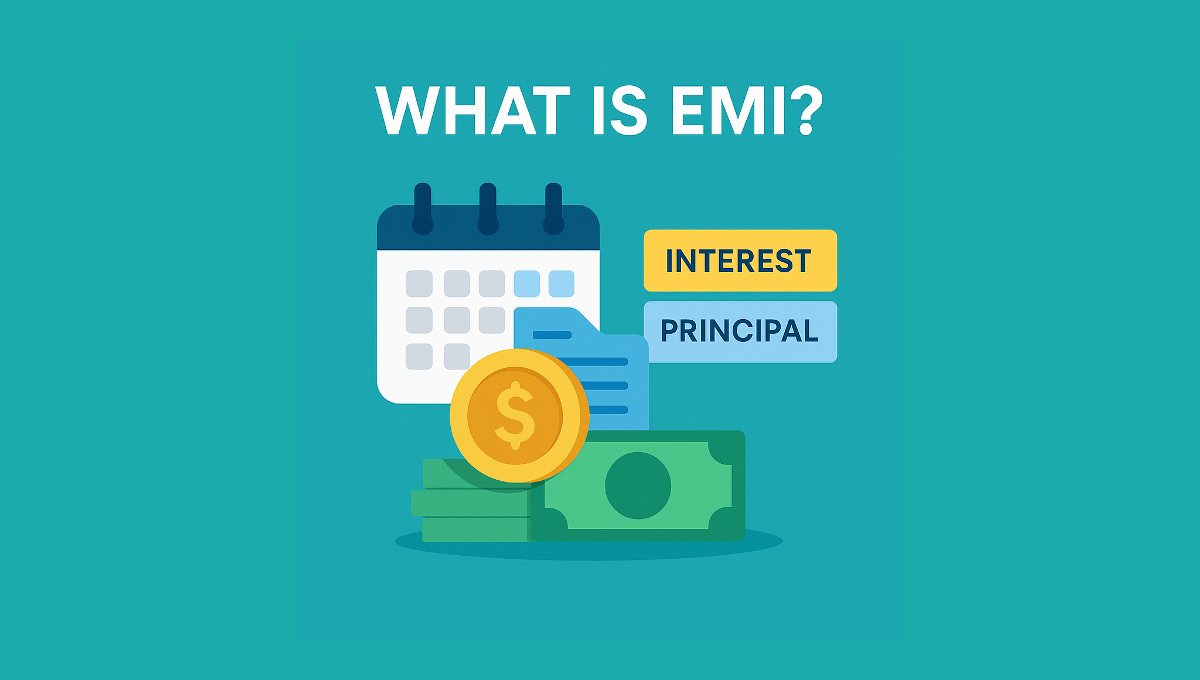
Learn more: What Is EMI? Full Guide
What Is Income Multiplier in Loan Eligibility?
The multiplier method calculates loan eligibility based purely on income.
Banks multiply your income by a fixed number to arrive at a maximum loan amount.
Multiplier Example (Personal Loan)
- Monthly income: ₹40,000
- Multiplier used by bank: 20×
Loan eligibility = 40,000 × 20 = ₹8,00,000
Common Multiplier Ranges
| Loan Type | Multiplier Range |
|---|---|
| Personal loan | 12× – 24× |
| Home loan | Income + EMI capacity based |
| Business loan | Profit-based |
Important: Multiplier depends on FOIR and credit score. It is never used alone.
FOIR vs Multiplier: Key Differences
| Factor | FOIR | Multiplier |
|---|---|---|
| Focus | Affordability | Income size |
| Includes EMIs | Yes | No |
| Risk control | High | Medium |
| Final authority | Yes | No |
👉 Banks approve the lower amount calculated by these two methods.
How Banks Actually Check Loan Eligibility (Step-by-Step)
Step 1: Income Verification
Banks verify income using:
- Salary slips and bank statements (salaried)
- ITR, GST returns, bank turnover (business owners)
Read more: Flexi & Hybrid Loans Explained
Step 2: FOIR Calculation
All existing obligations are deducted from income. If FOIR crosses limits, loan eligibility reduces sharply.
Step 3: Credit Score (CIBIL) Check
A good FOIR alone is not enough. Banks also evaluate your credit behaviour.
Learn more: What Is CIBIL Score?
Low credit score + high FOIR = High rejection risk.
Step 4: EMI Affordability Calculation
Banks calculate eligible EMI using:
Eligible EMI = Income × Allowed FOIR – Existing EMIs
Then they reverse-calculate loan amount using interest rate and tenure.
Use our tool: EMI Calculator
Step 5: Tenure & Interest Rate Adjustment
Longer tenure reduces EMI and increases eligibility, but increases total interest paid.
Banks choose a balanced approach.
Common Mistakes That Reduce Loan Eligibility
- Multiple small personal loans
- High credit card utilisation
- Short loan tenures
- Applying to multiple banks at once
How to Improve FOIR & Loan Eligibility
- Close small loans first
- Reduce credit card outstanding
- Add co-applicant income
- Increase tenure cautiously
- Avoid new EMIs before applying
FOIR for Business Owners
For business owners, banks consider:
- Net profit
- Cash flow stability
- GST consistency
Higher FOIR may be allowed, but documentation requirements are stricter.
Final Thoughts: Know the Formula Before You Apply
Understanding FOIR and multiplier gives you control over your loan journey.
Instead of guessing eligibility, you can plan EMIs smartly and avoid rejection.
Need help choosing the right loan? Get expert guidance from TechFinserv.
Disclaimer: This article is published for general informational and educational purposes only. The content does not constitute financial, legal, or professional advice of any kind. Loan eligibility, FOIR limits, income multipliers, interest rates, and approval criteria may vary depending on individual profiles, lender policies, and regulatory guidelines.
While reasonable efforts have been made to ensure accuracy, TechFinserv does not guarantee loan approval, eligibility, or specific outcomes. Readers are advised to verify details directly with banks, NBFCs, or official regulatory sources such as the Reserve Bank of India (RBI) before making financial decisions.
TechFinserv acts as an informational platform and guidance provider and is not responsible for decisions taken by users based on this content. By reading this article, you acknowledge that any action taken is at your own discretion and risk.